


Experiences
More than a place to stay, a place to explore, enjoy and discover
Areas To Explore
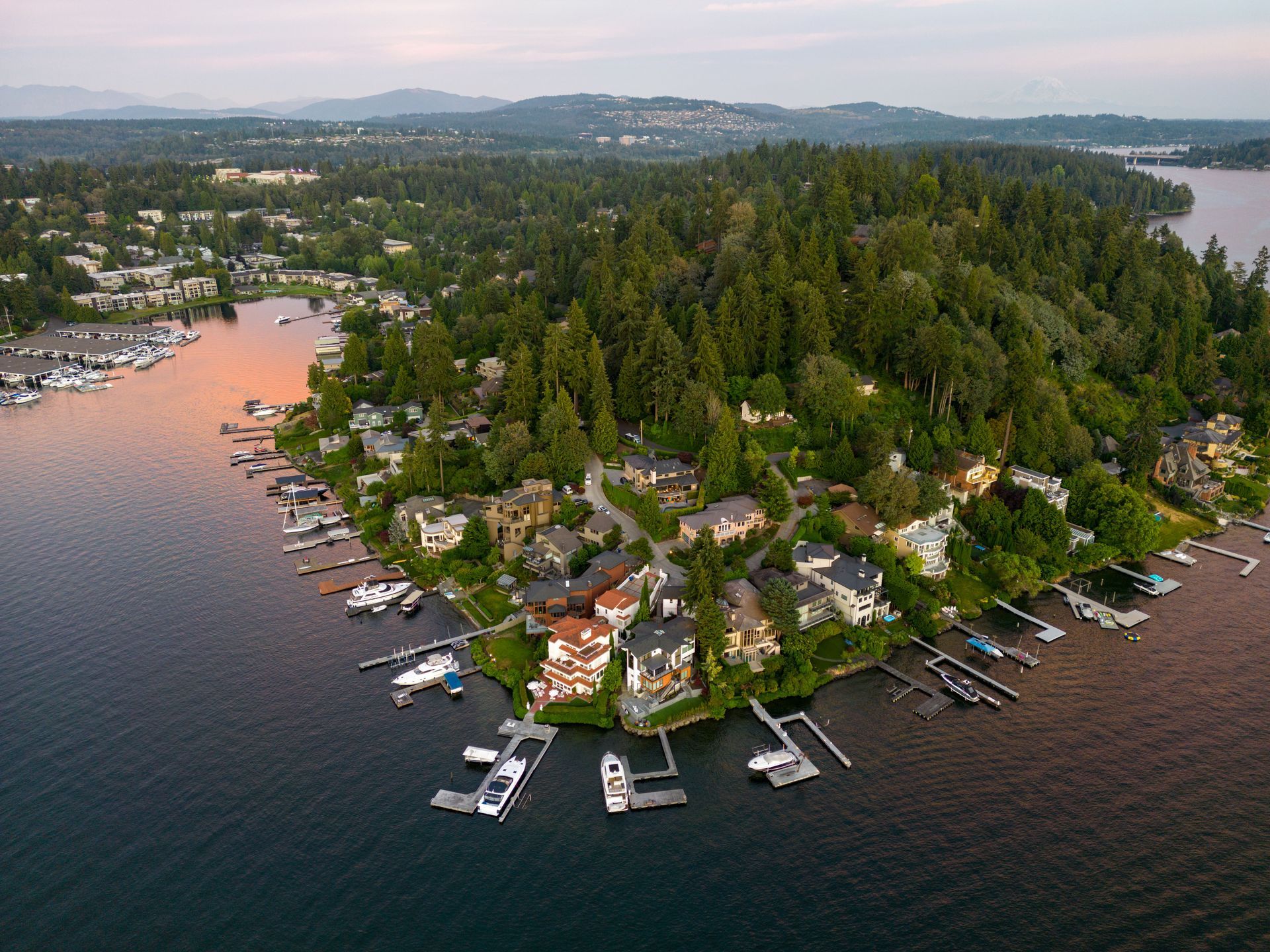
Lake Stevens
Lake Stevens is a 1,000-acre freshwater lake tucked into the rolling hills of Snohomish County, and it's the anchor of the neighborhood the Rhody House calls home. From the door, it's about a 15-minute walk or a 3-minute drive to public beach access at Sunset Beach — close enough that you don't need to plan around it, you can just decide on a whim to go.
The lake earns its reputation in summer. Warmer than most lakes in the region thanks to its shallow basin, it draws swimmers, paddleboarders, and kayakers from May through September, along with waterskiers and pontoon boats on the busier weekends. The closest park is Sunset Beach that includes a dock, swimming area and picnic benches. North Cove Park and Lundeen Park both offer easy shoreline access, grassy areas for a picnic, and swimming beaches for families.
Evenings here have their own rhythm. The lake tends to glass over as the wind dies down, and sunset views from the eastern shore are hard to beat — bring a blanket, or just find a bench. Whether you're spending a full day on the water or just want a quiet walk before dinner, Lake Stevens is the kind of place that's easy to fall into a routine with, even for a short stay.
Centennial Trail
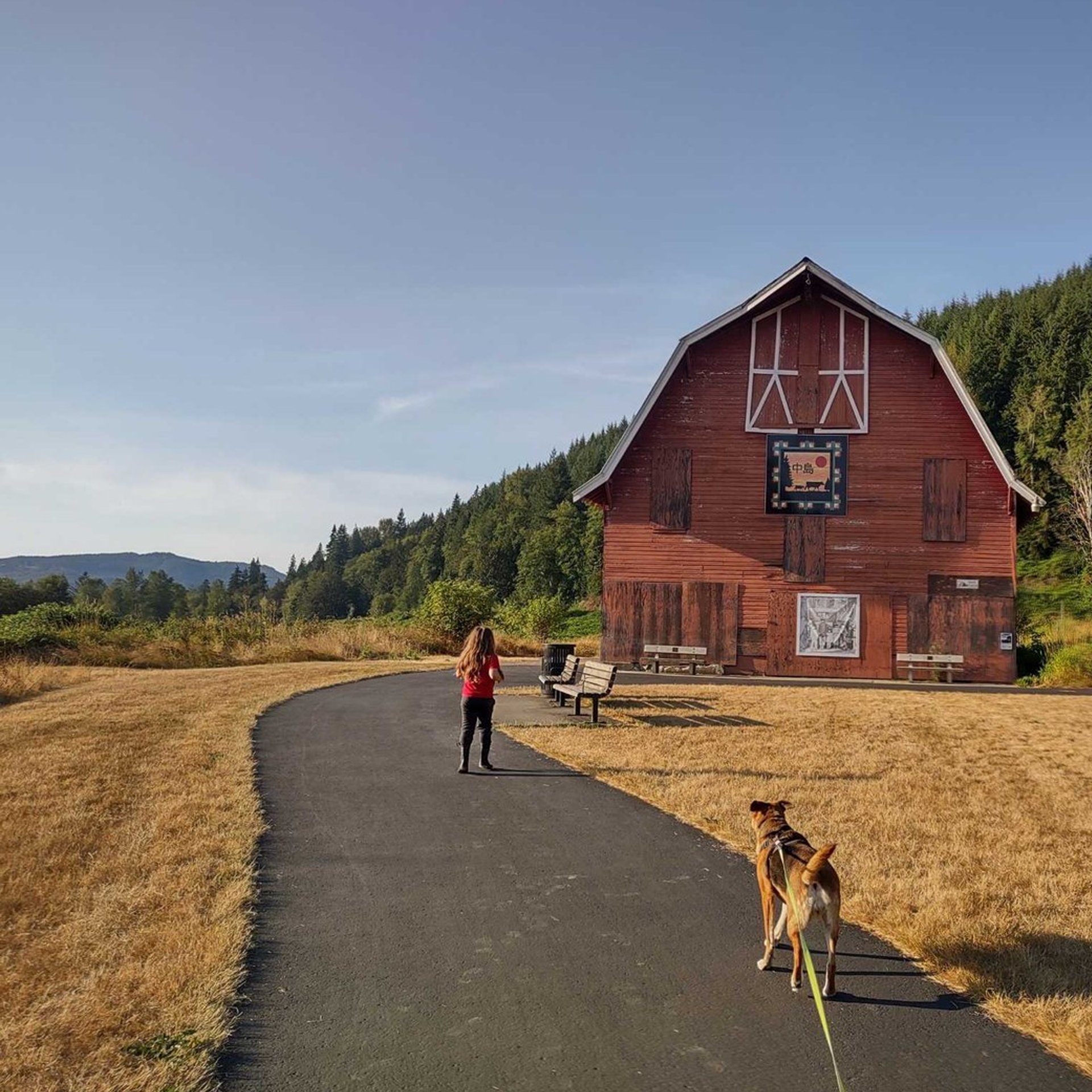
The Snohomish County Centennial Trail is one of those rare amenities that's genuinely useful for almost any kind of stay. It's a 30-mile paved, non-motorized trail that follows the old Seattle, Lake Shore and Eastern Railway corridor, connecting the historic city of Snohomish north through Lake Stevens, Marysville, and Arlington to the Skagit County line. Construction began in 1989 — the year of Washington's centennial, which gives the trail its name — and the final stretch was completed in 2013.
From the Rhody House, you're less than a mile from an access point, which makes it an easy default for a morning routine: coffee, then a walk or a run before the day gets going. Cyclists use it for longer rides, and there's a separate equestrian trail running alongside much of the route if horseback riding is on your list. The surface is smooth and mostly flat, so it works just as well for families with strollers as it does for serious runners logging miles.
Beyond the exercise, the trail is a quiet history lesson. It passes through old timber and railroad settlements, farmland, and river crossings, with interpretive signage scattered along the way explaining the area's Indigenous history and its logging-era past. You don't have to go far to get the best of it — even a short out-and-back gives you a real feel for why locals treat this trail as a everyday extension of their backyard.
The Mountain Loop Highway
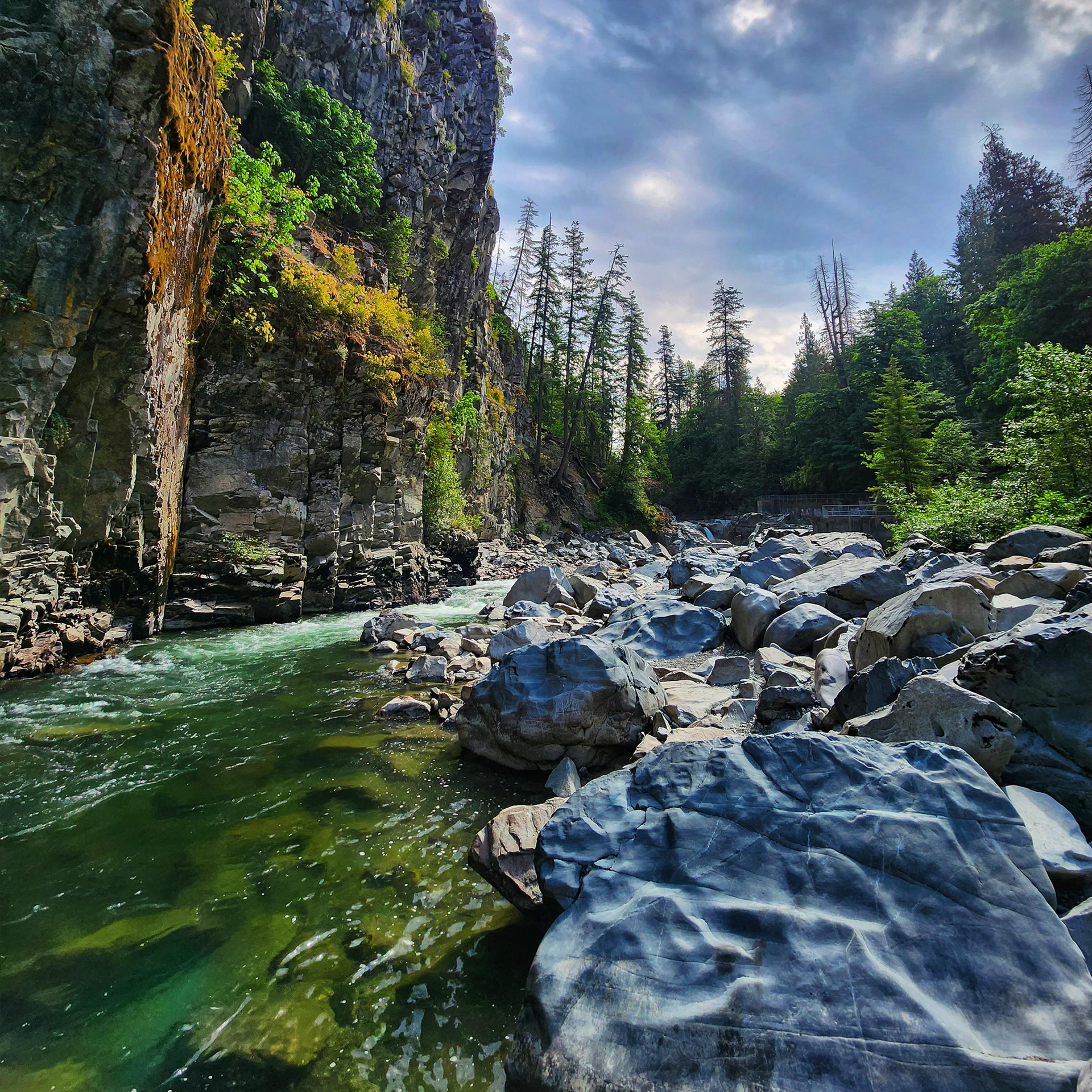
The Mountain Loop Highway is the drive that makes this whole corner of Snohomish County worth staying in. Officially a National Forest Scenic Byway since 1991, the route traces its origins back to 1891-era mining pack trails, later widened by loggers and Civilian Conservation Corps crews into the road that exists today. It runs 55 miles total between Granite Falls and Darrington, with a paved western leg following the South Fork Stillaguamish River, a roughly 14-mile unpaved middle section that crosses over toward the Sauk River, and a paved eastern leg into Darrington.
The highlight for most visitors is the Big Four Ice Caves trail, an easy, family-friendly 2.2-mile round trip on a wide gravel and boardwalk path that leads to views of Big Four Mountain and the ice caves that form seasonally at its base from avalanche debris (note: the caves themselves are dangerous and should only be viewed from a distance — collapses happen without warning). Along the way there are also turnoffs for Robe Canyon Historic Park, several waterfalls, and the trailhead for Mount Pilchuck.
Push further along the unpaved middle section, past Barlow Pass, and you'll pass the turnoff for Monte Cristo — a former silver mining boomtown, now a ghost town accessible by a gravel road closed to vehicles. The final stretch into Darrington follows the Sauk River through dense, untouched forest before dropping you into a small timber town with sweeping views of Whitehorse Mountain. Note that the unpaved middle section typically closes with snow from late fall into late spring, and there's no cell coverage once you're on the gravel — download offline maps and check current road conditions before you head out.
Mount Pilchuck
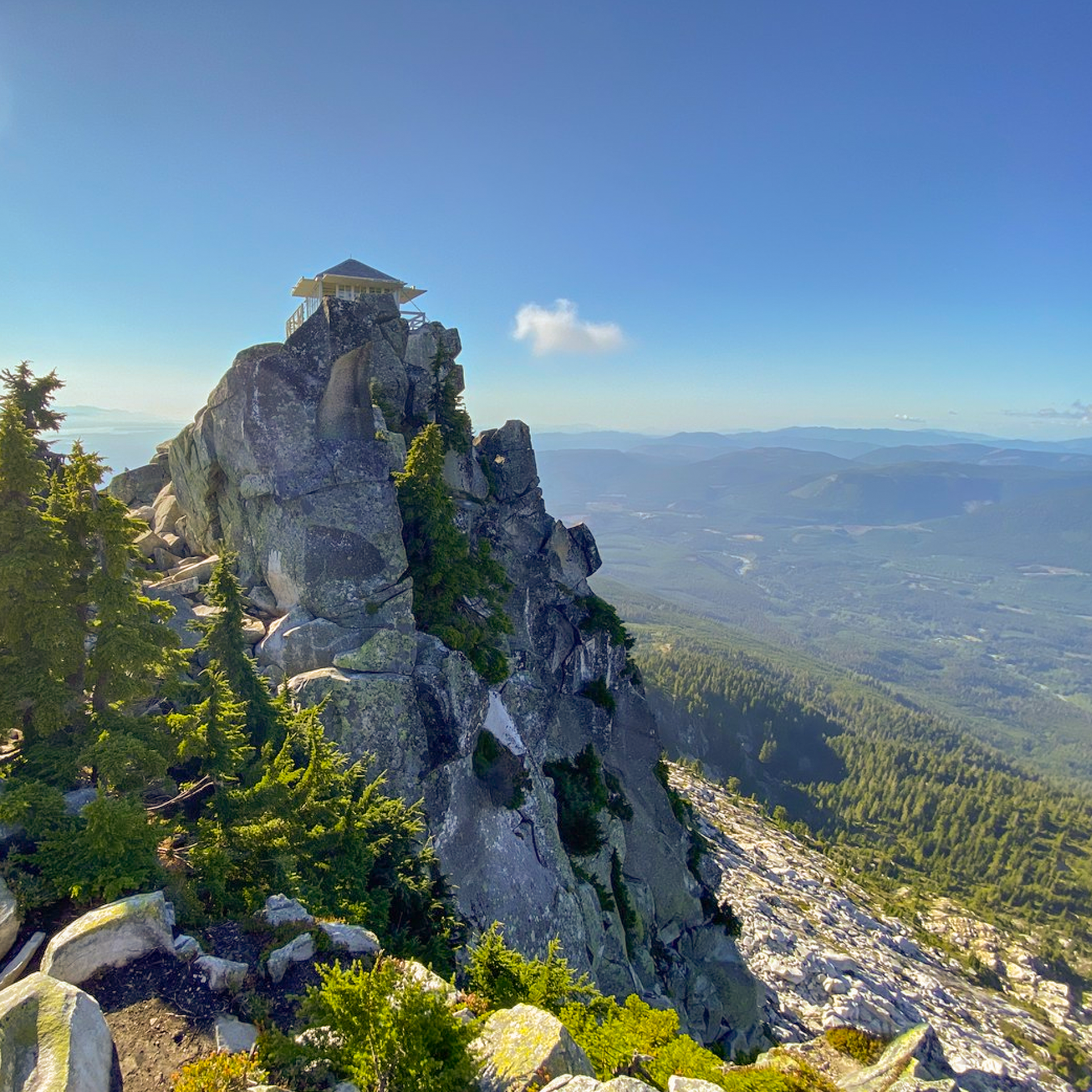
If you only have time for one real hike during your stay, Mount Pilchuck is the one locals point visitors toward. The trail is 5.4 miles round trip with roughly 2,200 to 2,300 feet of elevation gain — a compact but genuinely demanding route that packs most of its climbing into just a couple of miles. A high trailhead (around 3,000 feet) means you skip a lot of the low-elevation forest slog that other Cascade hikes require, so you're gaining views relatively quickly.
The trail starts in old-growth forest, then breaks out into rockier, more exposed terrain as you climb, with the last stretch involving some boulder scrambling. At the top sits a restored fire lookout, originally built in 1918 and staffed through the 1960s, now maintained as a day-use shelter with 360-degree views across the North Cascades — Mount Baker, Mount Rainier, and the Olympic Mountains are all visible on a clear day, along with Puget Sound.
Because it's one of the most rewarding hikes for the effort required, Pilchuck is also one of the busiest — expect company on weekends, and get an early start if you want the trailhead parking lot (which fills fast) and a quieter summit. From the Rhody House, it's roughly 45 minutes to an hour to the trailhead via Granite Falls and the Mountain Loop Highway. Bring real hiking shoes, water, and a layer for the summit, since it's noticeably colder and windier up top than it is at the car.
Historic Snohomish
Snohomish has been calling itself the antique capital of the Pacific Northwest for decades, and once you've walked First Street, it's not hard to see why. The historic downtown core dates back to the town's founding in 1859, and much of it — brick storefronts, false-front buildings, old signage — has been carefully preserved rather than redeveloped. Today those buildings house dozens of antique dealers, some housing multiple vendors under one roof, alongside boutiques, bookstores, and a solid lineup of local coffee shops and bakeries. During the summers, crowds come from all over for the Snohomish Farmers Market, and Kla Ha Ya Days.
It's about a 10 to 15 minute drive from the Rhody House, which makes it an easy half-day trip. Start with breakfast or coffee downtown, spend an hour or two working through the antique malls (even if you're not buying, it's genuinely fun to browse), then walk down to the Snohomish River for a break from the shops. The riverfront path and nearby Hal & Inge Marcus Park give you a green, quiet spot to sit if the day is nice.
Snohomish is also a good rainy-day plan, since most of what makes it worth visiting is indoors. And if you're staying multiple nights, it's worth timing a visit around one of the town's seasonal street festivals or the Thursday farmers market in summer, when First Street closes to traffic and the whole town turns out.
Everett Waterfront
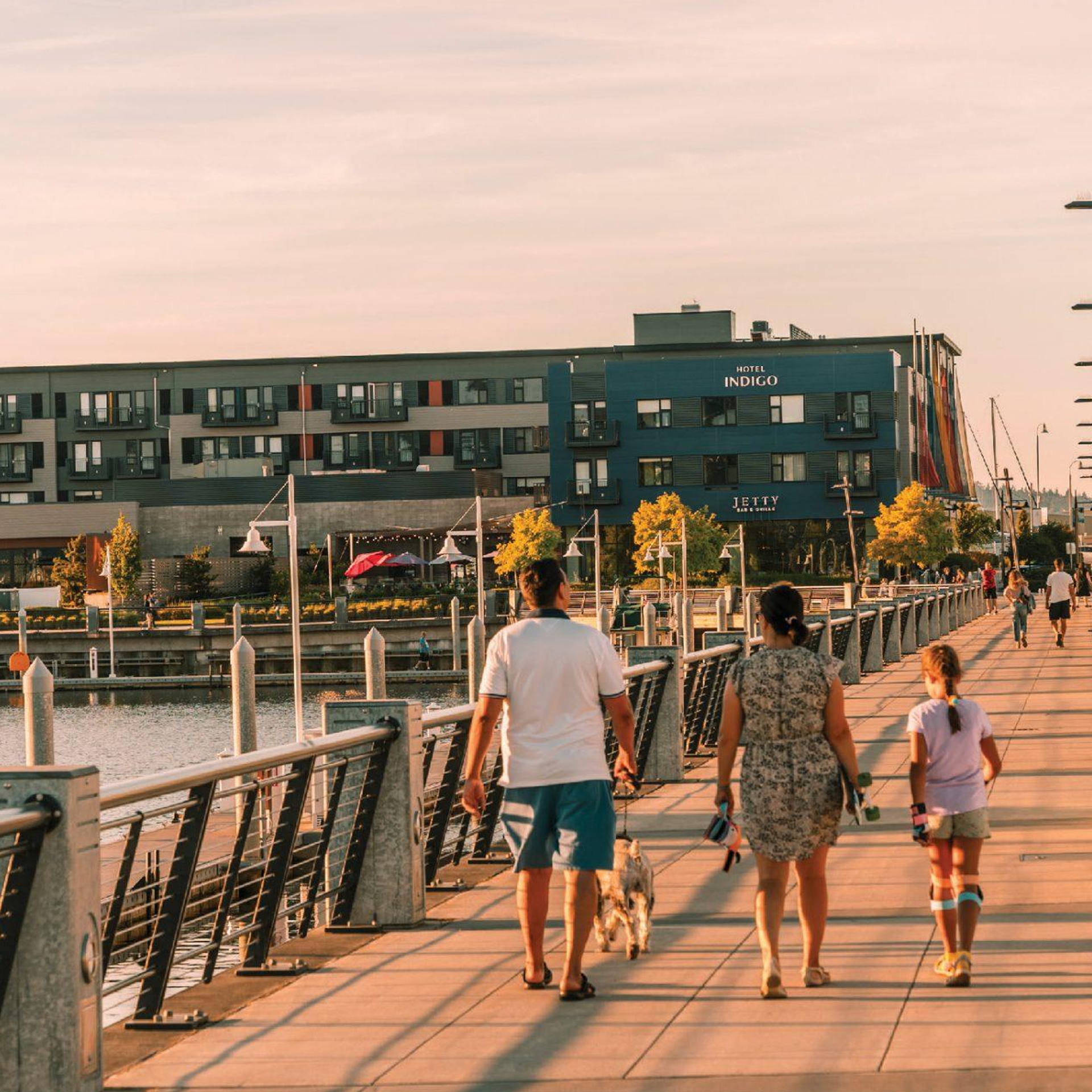
Everett's waterfront has quietly become one of the better day-trip destinations in Snohomish County, and it's only about 15 minutes from the Rhody House. The centerpiece is the Port of Everett Marina, the largest public marina on the West Coast with over 2,300 boat slips spread across more than 3,000 acres, most of it open to the public. A nearly four-mile paved public trail — locally called "The W" — runs along the water between 10th and 18th Streets, passing marina docks, public art, and historical markers about the area's lumber and shipbuilding past.
Food and drink are a real draw here. The waterfront has a genuine restaurant and brewery scene, from Anthony's HomePort and Anthony's Woodfire Grill to Scuttlebutt Brewing, with enough variety to make it worth a full evening rather than just a quick stop. Pacific Rim Plaza, one of the newer additions, has a splash fountain and over-water viewing platform that's a good spot for families to stretch their legs.
The real highlight, though, is Jetty Island — a two-mile, human-made sandbar just offshore that functions as a breakwater for the marina and, more importantly, as one of the best and least-crowded beaches in Washington. From early July through Labor Day, a free passenger ferry runs from Jetty Landing out to the island several days a week; outside that window, it's accessible by private boat or watercraft. There's no infrastructure out there — no cars, no running water, no shade to speak of — so it stays genuinely quiet even in peak summer, with warm, shallow water that's ideal for kids and casual swimmers, plus reliable wind for kiteboarding on the island's west side.
Restaurants
Lake Stevens
$$ Mexican Fare
$$$ Elevated Comfort Food
$$ Classic Mexican
$$ Fresh Pub Food, Kid friendly
$$ Flavorful Thai Food
Snohomish
$$ Amazing sweet & savory pies by the slice, featured on the Food Network
$$ Elevated Classic Dining
$$ Fish & Chips and other seafood classics
Snohomish Bakery + First & Union Kitchen
$$ Fresh baked goods, Restaurant is fresh american diner style
Everett
$$ Mouth watering fire roasted pizzas, elevated pub fare, and award winning ales.
$$ Upscale Sushi Restaurant
$$ Personal favorite, great quick stop chipotle style Korean Bowl spot